Introduction
For decades, wound care has been measured against a single milestone: closure. A wound that has re-epithelialized — skin has grown back over the defect — is typically recorded as “healed” on a discharge summary. But clinicians who manage chronic wounds, burns, and complex surgical sites know this milestone tells only part of the story. A closed wound can still be fragile, poorly vascularized, prone to breakdown, and cosmetically and functionally inferior to the tissue it replaced.
The real endpoint of wound care is not closure — it is tissue remodeling: the restoration of skin that is structurally sound, mechanically resilient, and functionally close to native tissue. This shift in perspective is increasingly shaping how advanced wound care programs at corporate hospitals evaluate the products and protocols they adopt.
Why Closure Alone Is an Incomplete Endpoint
Wound closure marks the point at which keratinocytes have migrated across the wound bed and formed a continuous epithelial layer. This is a necessary milestone, but several problems can exist beneath a closed surface:
-
Weak tensile strength — newly closed tissue may have only a fraction of the strength of uninjured skin, making it prone to reopening under tension or pressure
-
Disorganized collagen architecture — collagen fibers deposited during rapid closure are often laid down in a disorganized, whorled pattern rather than the organized basket-weave structure of native dermis
-
Poor vascular maturity — early granulation tissue is highly vascular but the vessel network is often immature and unstable
-
Contracture and scarring — closure driven primarily by wound contraction (rather than true regeneration) can result in significant scar tissue, restricted mobility near joints, and cosmetic outcomes that matter greatly to patients
For hospitals, these gaps translate into real clinical risk: wound dehiscence, recurrent ulceration at the same site, and follow-up visits or readmissions that a “closed” wound classification does not capture.
Remodeling: The Phase That Determines the Real Outcome
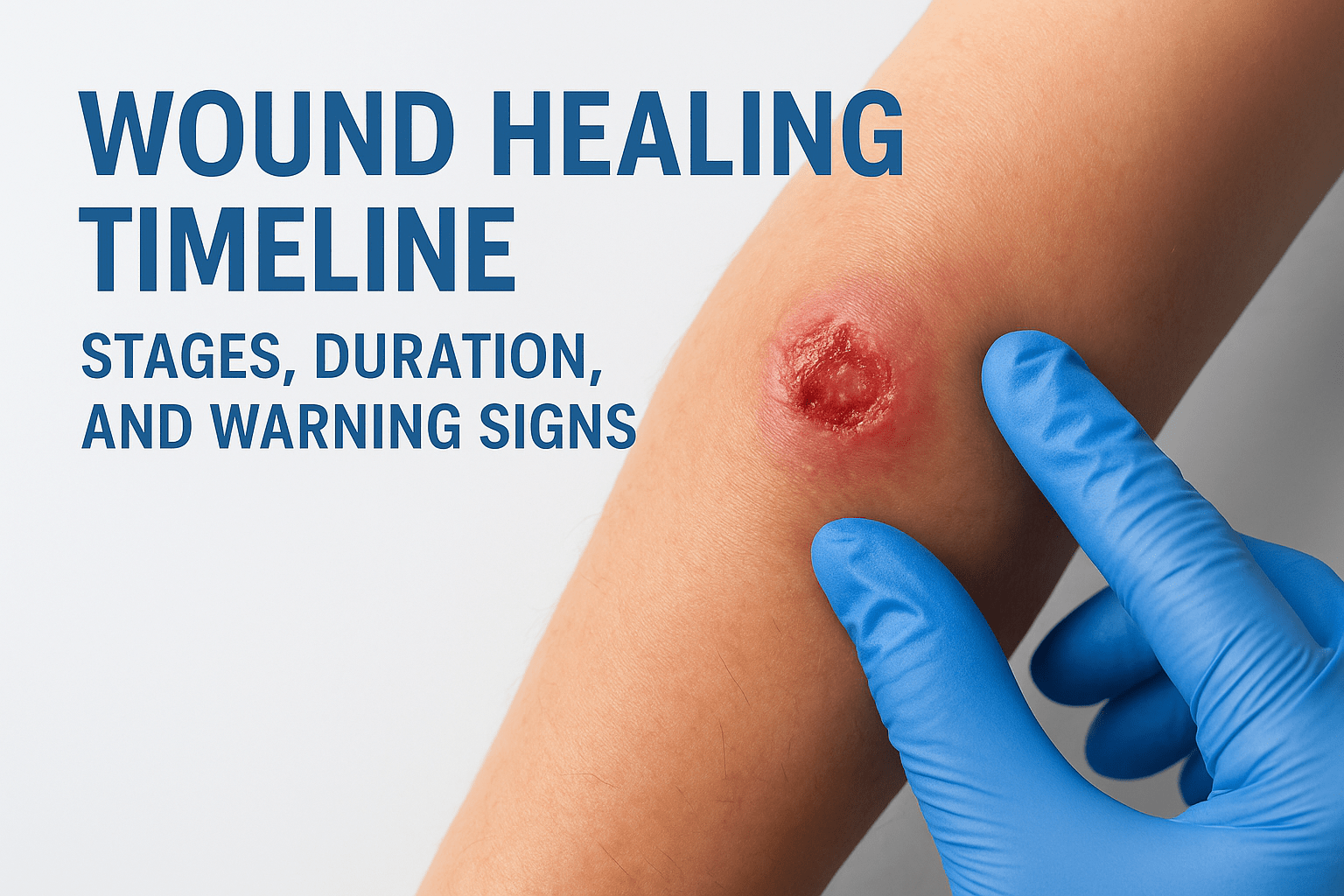
Tissue remodeling is the process by which the body converts the provisional matrix of early wound repair into tissue that functions like the skin it replaced. It involves:
-
Collagen conversion — Type III collagen, laid down quickly during proliferation, is gradually broken down and replaced with stronger, more organized Type I collagen
-
Cross-linking and maturation — collagen fibers cross-link over weeks to months, progressively increasing tensile strength (though it typically plateaus around 80% of original skin strength)
-
Vascular network refinement — the excess capillary network formed during granulation is pruned back to a stable, mature supply
-
Cellular apoptosis — the myofibroblasts and excess cells that drove wound contraction undergo programmed cell death, reducing scar bulk
This phase can continue for a year or more after a wound first appears closed — which is exactly why treating closure as the finish line under-serves the patient, and why hospitals increasingly build post-closure follow-up into complex wound protocols.
Supporting the Full Journey: Why the Scaffold Matters
The quality of remodeling is heavily influenced by what happens earlier in the healing process — specifically, whether the wound bed had access to an extracellular matrix (ECM) capable of guiding organized repair from the outset. A wound that closes over a disorganized, protease-degraded matrix is set up for a poor remodeling phase, regardless of how quickly it closed.
This is the principle behind CholeDerm®, Alicorn Medical’s indigenously developed, CDSCO-approved (Class D) tissue-engineered ECM scaffold, created in collaboration with the Sree Chitra Tirunal Institute for Medical Sciences and Technology (SCTIMST). Manufactured through the enzyme-free, detergent-free PrisTINE Process, CholeDerm® preserves 154 biomolecules and the native ECM architecture — giving the wound bed the biological scaffolding to support not just closure, but organized, durable remodeling:
|
Wound Care Goal |
How an Intact ECM Scaffold Supports It |
|---|---|
|
Faster, cleaner closure |
Structured cell migration and re-epithelialization |
|
Stronger, more durable tissue |
Supports organized Type I collagen deposition during remodeling |
|
Reduced scarring and contracture |
Guides regeneration rather than relying on contraction alone |
|
Lower risk of breakdown or recurrence |
Mature, well-vascularized tissue rather than fragile closure |
What This Means for Hospital Wound Care Protocols
For corporate hospitals and multi-specialty wound care centers, shifting the internal benchmark from “closure” to “quality of remodeled tissue” has practical implications:
-
Outcome tracking that extends beyond discharge to assess tissue durability at 3, 6, and 12 months
-
Protocol selection that favors regenerative scaffolds over dressings designed only to accelerate surface closure
-
Reduced long-term cost of care, as durable remodeling lowers rates of ulcer recurrence and revision surgery
-
Better patient-reported outcomes, particularly in plastic surgery, diabetic foot, and burn units where function and cosmesis matter as much as closure itself
Conclusion
A wound that closes quickly but remodels poorly is not a healing success — it is a delayed complication. As Indian hospitals expand dedicated wound care and regenerative medicine programs, the clinical and administrative conversation is moving from “how fast did it close” to “how well did it remodel.” CholeDerm®, developed and manufactured in India, is built specifically to support that fuller definition of healing — from the first day of closure through the months of remodeling that follow.
Hospitals evaluating CholeDerm® for their wound care, surgical, or diabetic foot programs can reach Alicorn Medical’s team at technical@alicornmed.com or sales@alicornmed.com.