
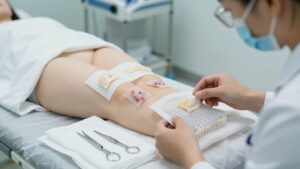
Biomaterials for chronic wound treatment: Types, benefits, and clinical considerations – English
Key Takeaways Biomaterials can help you create a wound environment that supports moisture control, tissue protection, granulation, and repair, but they work best when matched to the wound’s cause and the patient’s wider clinical needs. Chronic wounds often remain trapped in inflammation rather than progressing through normal repair. Material choice should reflect exudate, tissue quality,…
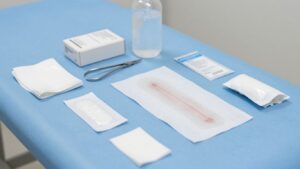
CholeDerm wound dressing: A clinical guide to its uses, benefits, and application – English
Key Takeaways CholeDerm wound dressing is a lyophilised, unmeshed acellular dermal matrix intended for use as part of a structured wound-care plan. Its role, application, and follow-up depend on wound-bed quality, perfusion, infection control, exudate, and the patient’s underlying condition. It is a single-layer, porcine-derived extracellular matrix scaffold. The matrix contains collagen, elastin, glycosaminoglycans, and…
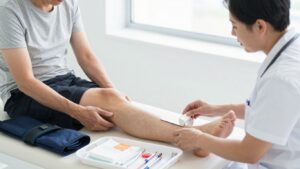
Advanced wound care treatment – English
Key Takeaways Advanced wound care treatment is a coordinated process that addresses the wound itself, its cause, and the patient’s ability to heal. Good outcomes depend on repeated assessment, appropriate tissue management, and prevention of recurrence. Complex wounds need a clear diagnosis before treatment is selected. Debridement, dressings, off-loading, compression, and other therapies serve different…
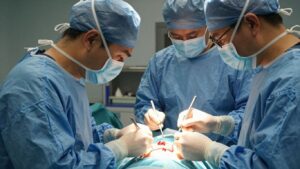
acellular dermal matrix – English
Key Takeaways An acellular dermal matrix is a biologic or engineered scaffold used to support tissue repair and reconstruction. Its value depends on the material, the procedure, and the patient’s healing conditions. Decellularization removes most cells while retaining important extracellular matrix structure. The scaffold can support cellular ingrowth, vascularization, and gradual tissue remodeling. Applications include…
enzyme free tissue decellularization – English
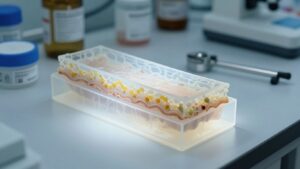
Key Takeaways Enzyme free tissue decellularization uses physical and osmotic steps to remove cellular material while seeking to preserve the native extracellular matrix. The process is tissue-specific; cellularity, thickness, and architecture shape the protocol. Mechanical delamination, freeze–thaw treatment, osmotic exposure, and rinsing can reduce reliance on enzymes and detergents. Preserving collagen, glycosaminoglycans, adhesion proteins, and…

CholeDerm wound care – English
Key Takeaways CholeDerm wound care involves more than placing a dressing over an injury. You need a wound assessment, a suitable application technique, and regular review of the patient’s overall healing progress. CholeDerm is a lyophilized sheet made from cholecystic extracellular matrix. It is intended for dermal application and supports a moist wound environment. Wound-bed…